


“Protecting the environment, encouraging productivity, engaging our community to ensure sustainable farming for current and future generations.”
September 2026 President’s Report

Jack Tucker, President
Hello and welcome to the 2026 Winter edition of our Newsletter.
A big welcome to our new facilitator Nina Zanotto! This is Nina’s first newsletter, and I encourage people to introduce themselves when they get the opportunity. Nina has moved into the role seamlessly, and from a committee point of view we are wrapped in having her on board. One of the key things that appealed to the selection panel was Nina’s passion and knowledge, not just for conservation related work, but for sustainable production agriculture as well. A very big thank you to recently departed Nick, who left to chase a more hands on
role, Nick has done a fantastic job over the last couple of years, engaging with Landholders, seeking funding, initiating and assisting with grant applications and generally getting stuff done! Back in May we held an informal farewell Nick/welcome Nina lunch at the Maroona Pub. Thank you for all your hard work and good luck Nick!
We have missed a couple of newsletters, and seasonal conditions have definitely improved since our last one! As I write this, the Hopkins is in full flood, crops are looking good and there is lush green as far as the eye can see. It has been amazing turnaround from the extreme heat and dry of the last 2 years. I really think a big part of this incredible farm ecosystem rebound can be put down to good practice by local land managers. It was pleasing to see the vast majority of farmers employing modern techniques such as containment feeding, rotational grazing and stubble retention through the dry spell to maintain groundcover and protect topsoil. Aside from the obvious production benefits this has a real positive flow on affect for the environment in multiple ways. Retaining carbon and organic matter directly increases water infiltration rates and soil water and nutrient holding capacity as well as filtering runoff water. Perennial grasses are far more likely to persist, and not be replaced by pioneer species such as Capeweed, thistles, erodium and sorrel (all symptoms of overgrazing/bare soil). Good groundcover creates shelter from the sun and predators for both invertebrates and small vertebrates (frogs/skinks etc), which allows for rapid recruitment when rain arrives. Well done everyone!!
Since the rain began in May I have had lots of enquiries from people looking to do, up until then, unplanned reveg jobs. My main piece of advice is to really focus on
weed control (particularly if Phalaris is present). Even if you have the plants on hand and are desperate to get them in, the likelihood of success is greatly improved with
good weed control. Along the same lines I have had several enquiries regarding direct seeding for the upcoming Spring. The seeder will be serviced up and available from now on. Its not
too late to collect seed with both Redgum and Yellow Box both still hanging on, and plenty of the less seasonal species being available in good quantities. Feel free to contact me directly for info regarding seed collection – it’s very easy!
Our region has recently received a big boost via the installation and commissioning of the East Grampians Pipeline. This will be a real gamechanger for farmers, providing different enterprise options, opportunities for stock finishing and better grazing management, as well as the obvious advantages in having secure fresh water over summer.
Having piped water delivered via troughs essentially makes traditional farm dams redundant for watering stock, and with a relatively small amount of capital investment and labor they can be converted into extremely high value habitat areas. Water in the landscape is crucial for wildlife, and the backbone of any healthy ecosystem. By excluding stock, adding shelter in the form of a diversity of plant species, and potentially some structure such as rocks and logs, farm dams can be quickly transformed into aesthetically pleasing biodiversity hot spots. There has already been some interest from Landholders on this topic, and we are currently looking into getting some professional advice on the subject, and potential funding opportunities so watch this space!
As I am sure everyone is aware our next event is the upcoming Chatsworth House field day where our group will once again be partnering with Sarah and Tom
Whinney. Our Soil Health subcommittee, together with the Whinney’s have put an enormous amount of work into this event and there are some really top-notch
speakers locked in. Get in quick to get tickets! As always I will finish by encouraging everyone to spread the word about our great group and encourage anyone who has any ideas or topics of interest for us to investigate to please contact Nina or any of the committee members.
Happy Landcaring!
Jack

Picture taken by Jack Tucker of the routine bird surveying done on farm by the GHCMA Dave Nichols + Nina .
Hi From Nina and Happy Spring everyone!
Hi Upper Hopkins Land Management Group members, and the community beyond!
My name is Nina, and I’m so excited to be here as the new Facilitator for the Upper Hopkins Land Management Group.
Before I tell you a little bit about myself, I first want to say how lucky we are to have such an incredible committee. I’ve felt so welcomed and supported in my first few months, and the members I’ve had the chance to meet so far have been just as welcoming — so a big thank you all round!
Another huge thank you has to go to Nick Moll. I certainly have some big shoes to fill! I’ve also been incredibly lucky that Nick hasn’t completely left us just yet. He’s still supporting me and the group through the handover and helping with some other exciting projects. One exciting project I particularly want to highlight is our Biolinks Project. You’ll see I’ve included the launch video in this newsletter, which gives a great introduction to what the project is all about.
The more time I spend in this region — out in the landscape, meeting members, and getting to know our neighbouring Landcare facilitators and GHCMA staff — the more I realise just how special this community is. Everyone seems to have something to offer, a story to tell, or knowledge to share, and there’s a real sense of pride and connection to the landscape that has come through in almost every encounter I’ve had so far.
I’m really looking forward to getting out and meeting more of you, learning from the incredible knowledge that already exists within this community, and finding ways that I can support the work you’re already doing — as well as bringing some new ideas along the way.
So please, reach out! Whether you have a project idea, something happening on your property, a question, a story worth sharing, or you’d simply like to say hello, I’d love to hear from you and come visit!
As you might be able to tell, I live a little bit out of the region, towards the Central Victorian Goldfields — which makes my drive west to the Upper Hopkins quite a beautiful one! I get to wind my way over alongside the Pyrenees and Mount Cole, and most recently, through some serious wetland and river action. It’s been pretty special watching water return to parts of the landscape and seeing wetlands re-emerge.
In 2024, I completed a Bachelor of Science specialising in Regenerative Agriculture. Since then, I’ve been lucky enough to work on some pretty cool project farms across NSW and Victoria, which has helped shape a lot of my interests. I’m interested in waterway health, landscape rehydration and localised economies — and I also love a bit of compost and soil health talk! But my interests are by no means limited to those! I’m curious about lots of different landscape elements and more importantly how they can complement each other. I must say one of my favourite parts of this work so far is learning from other people, hearing what they’re passionate about and being introduced to ideas I might not have come across before. So whatever your area of interest, I’d love to hear about it.
If I’m not doing Landcare work, you’ll probably find me working at a local micro dairy (reach out if you’re intrigued and no, they aren’t tiny cows), horse riding, gardening, or walking along the river at home.
I’m really excited to bring these interests into my role, but even more excited to learn from the people who know this landscape best.
So, a big thank you for having me here-and hope to meet a lot of you soon.

40 years of Landcare + Victorian Landcare Forum

Photo of Upper Mount Emu Creek Facilitator Lyn Heenan, UHLMG Facilitator Nina Zanotto, Upper Glenelg Facilitator Lynn Brown, Hamilton District Facilitator Lucy Cameron. Southern Grampians Facilitator Lisa McIntyre, CEO Landcare Victoria Claire Hetzel, Beyond Bolac Facilitator Jileena Cole.
I recently had the chance to attend the Victorian Landcare Forum, which felt particularly special this year as we celebrate 40 years of Landcare in Victoria.
It’s pretty amazing to think that 40 years ago, the Landcare movement began right here in Victoria, with the first group forming at Winjallok, near St Arnaud, in 1986. At the time, local farmers were facing some very practical shared problems – including rabbits, soil erosion and declining land condition – and realised that many of these issues couldn’t be tackled property by property. Neighbours needed to work together across the landscape.
From those beginnings, the simple idea of local farmers coming together to care for their land grew into the Landcare movement we know today. Forty years on, Landcare encompasses everything from sustainable agriculture and soil health to waterways, biodiversity, revegetation, community education and much more – but that original idea of working together across the landscape is still very much at its heart.
The Forum was also a great chance for me to catch up with some of our neighbouring Landcare facilitators (pictured !). While we each work with our own groups and communities, our landscapes – and many of the challenges and opportunities within them – don’t stop at group boundaries. Having this network of facilitators nearby means we can share ideas, learn from what’s working in each other’s patches and look for opportunities to collaborate across the region.
As someone still relatively new to the Landcare facilitator world, it was pretty inspiring to be surrounded by people who have been involved for decades alongside a new generation of facilitators, volunteers, farmers and community members. I came home with plenty of new connections, inspiration and, unsurprisingly, a rather long list of ideas for the Upper Hopkins! But perhaps the most important thing I took away from the Forum is that Landcare looks different for every community. It is shaped by the people, landscapes, challenges and ideas within each place – and that’s what makes it so special. For me, that’s an exciting reminder that Landcare in the Upper Hopkins can continue to grow and evolve around what matters to our community.
2026 Chatsworth House Field Day- UHLMG Members receive a discount!
On Behalf of the Upper Hopkins Land Management Group and Chatsworth House we are excited to present you with the 2026 Chatsworth House Field Day.


Frog deaths
Frog deaths and Chytrid fungus
In the wake of a very successful project that has led to the protection of 150 hectares of Growling Grass Frog habitat, we have sadly received a couple of reports of frog deaths at Glenelg Hopkins CMA. You may remember reports of sick and dead frogs in the media going back to 2021. One of the likely causes of these frog deaths is the amphibian chytrid fungus (Batrachochytrium dendrobatidis).
Signs
Chytrid fungus attacks the keratin in the skin, which causes the skin to change colour, and even peel off. Amphibians rely heavily on their skin, including for breathing and drinking. Another sign is the position of the legs: instead of being tucked in, sick frogs have the legs spread away from their body. A sick frog will not (or hardly) move off when you approach it.
Chytrid fungus is transmitted through direct contact, and through water. Cold makes frogs more susceptible to chytrid fungus, basking in the sun helps protect frogs from disease.
It is only known to infect frogs and other amphibians, causing chytridiomycosis, a disease that is unique to amphibians. This disease is the major suspect in causing the current mass die-off, but at this stage we simply don’t know, and we need to rule out a range of other pathogens, toxins and stressors. The Australian Museum is working to determine what is causing this frog mortality event.
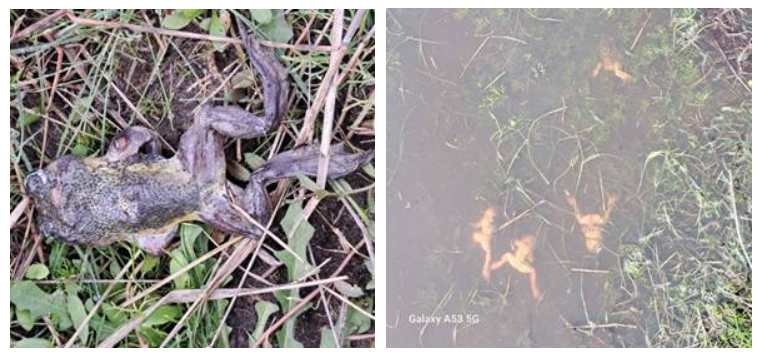
Typical posture and skin appearance in frogs affected by chytrid fungus. Photos supplied by Kathy Kotsovos
What can I do?
If you observe a sick or dead frog, please email your observation (including photos and location information, if possible) to the Australian Museum’s Herpetology team at calls@frogid.net.au.
We can minimise the possibility of spreading the disease from one site to another by cleaning our footwear, equipment and vehicles between locations with soapy water and and disinfecting with a 10% bleach solution.
Frogs drink and breathe through their skin, making them especially vulnerable to pesticides, herbicides, and fertilisers. Reducing usage close to water, is one of the important things you can do to support frogs.
Open spaces for basking as warming up in the sun is important to control diseases like amphibian chytrid fungus.
Limit the risk of disease transfer by not translocating frogs and tadpoles from one location to another.
Introduced fish species like Carp, Mosquito fish (Gambusia) and Redfin feed on tadpoles and even mature frogs. Do not release them in frog habitat.
Download and record frog calls with the free FrogID app. FrogID is the Australian Museum’s citizen science project that is helping us learn more about where frogs are distributed and what is happening to Australia’s frogs.
More information
Save Australia’s Frogs – The Australian Museumhttps://australian.museum/get-involved/citizen-science/frogid/appeal-save-australias-frogs/
Save the date – UHLMG Annual General Meeting

Bush Fire Recovery Continues
By Heather Fleming-
The Yarram Gap fire that burned for several weeks across the Grampians during the summer of 2024-5 was finally halted on our farm at ‘Inverness’, near Willaura.
The wildfire had ravaged parts of the National Park. Countless animals died and vast hectares of bushland were scorched. The wildfire also burnt hundreds of sheep, destroyed crops, pasture, buildings and fences. While we were largely spared the dreadful impacts some of our fellow farmers faced, we were never-the-less disappointed to see our young native shelter belts go up in smoke. As anyone who has ever worked to establish these plantations knows, it’s a big, expensive, time-consuming job. Fencing, ground preparation, spraying, tube-stock
and tree guards are all significant costs. Then there’s the effort of planting out the young trees themselves. We were delighted therefore when the UHLMG was successful in securing a grant to assist us replant what was destroyed in the Yarram Gap fire.
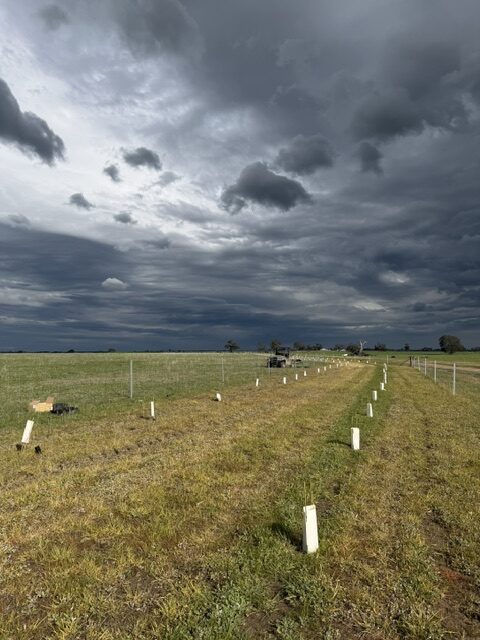
During August, one thousand trees from Kerringle Nursery were planted by the Hopkins Correctional Centre’s ‘Landmate Crew’. Their contribution was a huge benefit to us. It’s one thing to find the funds to purchase everything needed, but getting the work done is another matter. Were it not for the Landmate members, we would have struggled to get the trees in, and the project may not have gone ahead. Thankfully however, we now have rows of promise in our shelter belts and are looking forward to seeing these young trees grow strong and healthy. We’re extremely grateful to the UHLMG for understanding our needs, and for seeking funding to ensure that the benefits of shelter and biodiversity on our farm can be secured, maintained and improved.
- In the aftermath of the Yarram Gap fire, we were left with very few trees in our
shelter belts. - Thanks to a grant through the UHLMG, and the assistance of the Hopkins
Correctional Centre’s ‘Landmate Crew’, new trees have been planted at
‘Inverness’ and the benefits of biodiversity and shelter will be secured into the
future.


Some more photos below of our 2026 Victorian Landcare Grant recipients getting their plantings done! Great Job to the Prices, Brewis’ and Guthrie’s, what an effort! Collectively over 4500 trees planted across these projects.
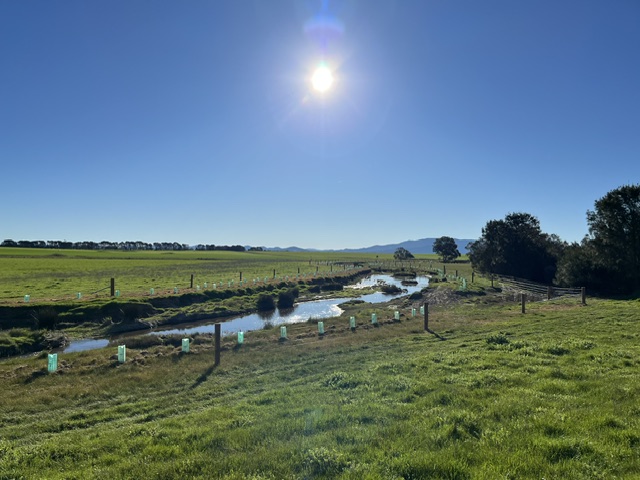
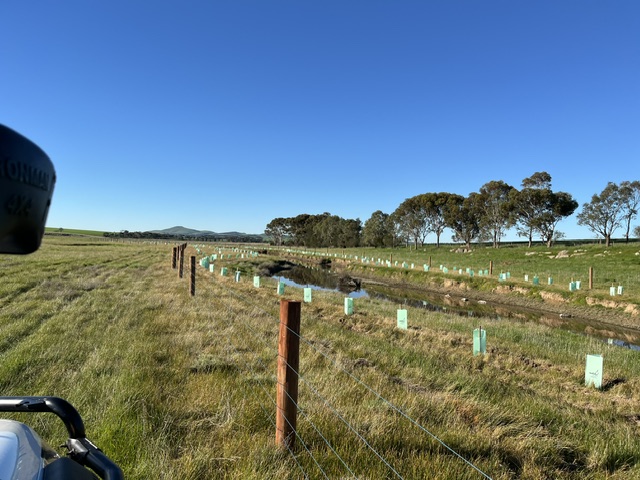
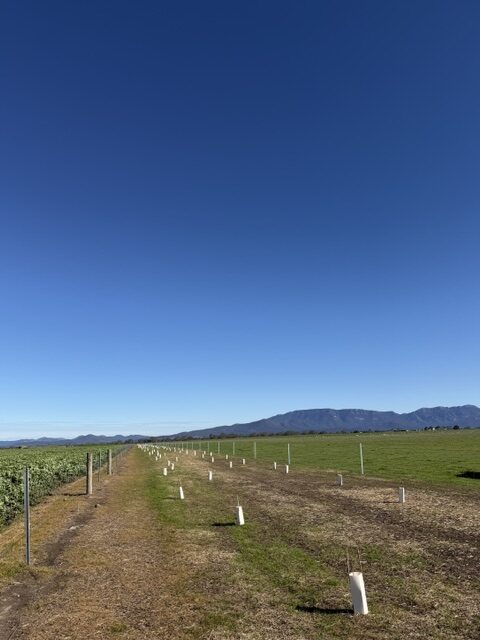


This project is jointly funded by the Australian and Victorian Governments under the Disaster Recovery Funding Arrangements (DRFA) under a cost share arrangement.
Check out your wetlands

H5 Bird FLU

Blaze aid Funding available

HELPING FARMERS PREPARE FOR BUSHFIRE SEASON
BlazeAid’s 2026 All Fired Up Grant Program helps eligible farmers improve the safety, reliability and effectiveness of their existing private firefighting equipment.
The co-payment grant covers 50% of approved costs for repairs, servicing and upgrades such as pumps, baffled water tanks, hoses, nozzles, UHF equipment, protective clothing and first aid kits. The program supports farmers who are investing in their own fire preparedness and are ready to assist their neighbours and wider community when needed.
In addition to PFFU upgrades, BlazeAid is seeking to expand the All Fired Up Initiative to provide Air/Water fire extinguishers for community members, helping users of country roads, households and small landholders be better prepared this fire season
Applications open at 9am on 1st of September 2026 and close at 5pm on 30th September 2026
Biolinks Launch
This project is a really important step forward for our Landcare community. Not only will it help recognise and reflect the incredible work that landholders and Landcare groups have already been doing across our landscapes, but it will also give us a platform to think bigger — helping us identify opportunities, design meaningful future projects and strengthen connections across our local regions. Ultimately, it’s about building on what is already happening on the ground and looking at how individual efforts can become part of a more connected landscape.
A huge thank you to Project Platypus for all the work that has gone into getting the project to this point. I’m very excited to be involved, to see where it takes us, and most importantly, to share the journey with you all!
Events, Events, Events!


Profitable and Resilient Farms Workshop Lake Bolac VIC
Lake Bolac Golf Club, Complex Road, Lake Bolac, VIC, 3351, Australia
16/09/2026, 9:00 AM to 4:00 PM AEST
A practical one-day workshop designed to help Victorian farmers make clearer, earlier and more confident decisions in dry and variable seasonal conditions. Drawing on RCS Management principles from our Grazing for Profit school, the day is tailored to the current pressures and priorities of your region.
This training focuses on the real decisions driving farm performance under pressure: when to act, what to adjust, and how to protect both land condition and business cashflow while maintaining wellbeing.
We will work through tools to:
- assess feed and pasture availability,
- understand stocking rate and carrying capacity relationships,
- identify financial pressure points,
- and set clear decision triggers before conditions force reactive choices.
The emphasis is on practical application. You’ll discover what to look for, what it means, and what to do next.
Content is adapted on the day to local conditions and enterprise mix, ensuring relevance for beef, sheep and mixed farming systems across Victoria.
The outcomes you can expect from the workshop include improved timing and quality of farm decisions, stronger resilience under dry conditions, and simple tools that can be applied immediately back on farm.
For more information or to discuss having a Profitable and Resilient Farms Workshop in your region, please contact our team.
This event is being delivered by RCS on behalf of Agriculture Victoria as part of the Victorian Government’s statewide Drought Support Package.


Grassy Tour weekend – Woorndoo wonders
17 — 18 October
Woorndoo’s grasslands blow us away. Nothing beats these grasslands for outstanding interest. This overnight trip is worth the drive!
We’ll be checking out Woorndoo Common and Woorndoo Cemetery. The Woorndoo Chatsworth Landcare Group are leading the way restoring and recreating roadside grasslands using scrape and sow – we’ll be checking a fine example of that out too. BYO lunch. Remember to wear closed shoes, dress sensibly for the weather and bring sunscreen and water!
Stay for dinner Saturday at Lake Bolac pub and overnight for more grassland action Sunday morning!
You can camp for free by Lake Bolac (Lake Bolac Foreshore Reserve – toilets and showers with a $5 token from the info centre or Cafe), the motel in Bolac is also fine, and there’s accommodation in Mortlake too.
Even better, we’ll be going to the inaugural Friends of Illabarook Grassland Flora Reserve on the way back (register separately for that, details tbd).
We may be able to organise some carpooling from Melbourne. Tick the box on the registration form if that’s something you’d be interested in, as a driver or passenger.
Further details to come, register now and we’ll keep you posted.
This tour is being run in conjunction with the Woorndoo–Chatsworth Landcare Group.


Some interesting seminars from Central Victorian Biolinks Alliance
Thank you all for reading this far! I will endeavour to continue seasonal newsletters. Happy Spring.